 A1 Car Rental
Coffee comes from Ethiopia. The arabica tree grew wild in the forests of Kaffa long before anyone roasted a bean, and the legend of the goatherd Kaldi, whose goats danced after eating red berries, is the country's favourite origin story. Today Ethiopia is Africa's largest coffee producer and one of the few places where coffee is still a ceremony rather than a takeaway. If you only do one cultural thing in Addis Ababa, do this one.
The ceremony, step by step
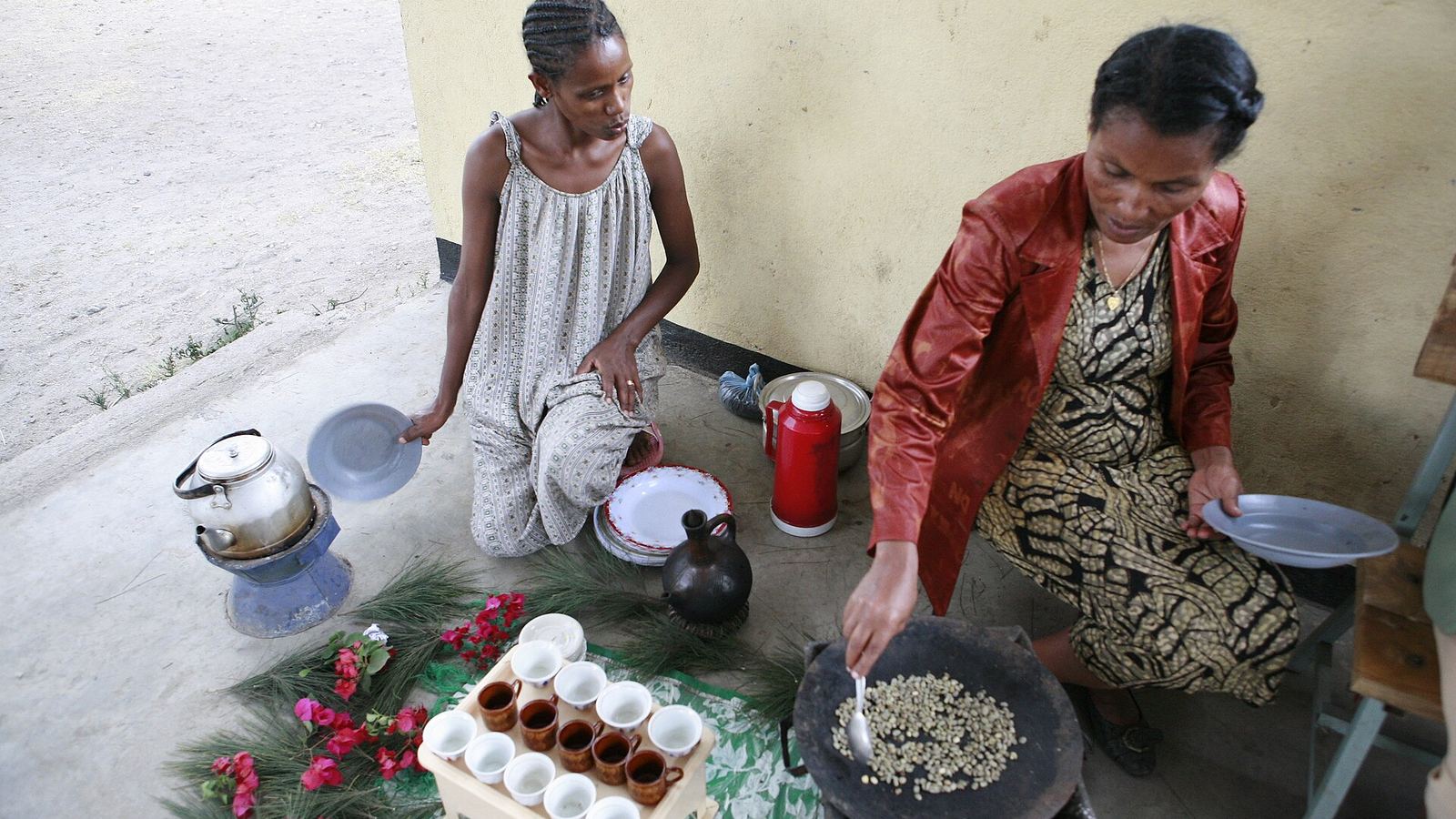
The coffee ceremony (buna) is a daily ritual in homes and a welcome for guests, and it is performed by a woman of the household, traditionally in a white cotton dress. It takes about an hour, and every step is part of it:
- Grass and incense. Fresh grass is spread on the floor, flowers are added, and incense (frankincense or sandalwood) is lit on charcoal. The smoke is part of the aroma.
- Washing and roasting. Green beans are washed, then roasted in a flat iron pan over the charcoal until they are dark and shining with oil. The pan is carried around so each guest can smell the smoke and wave it towards their face.
- Grinding. The beans are ground by hand in a wooden mortar (mukecha) with a heavy pestle.
- Brewing. The grounds go into the jebena, the round-bottomed clay pot with a long neck, with water, and are brought to the boil over the coals, then set aside to settle.
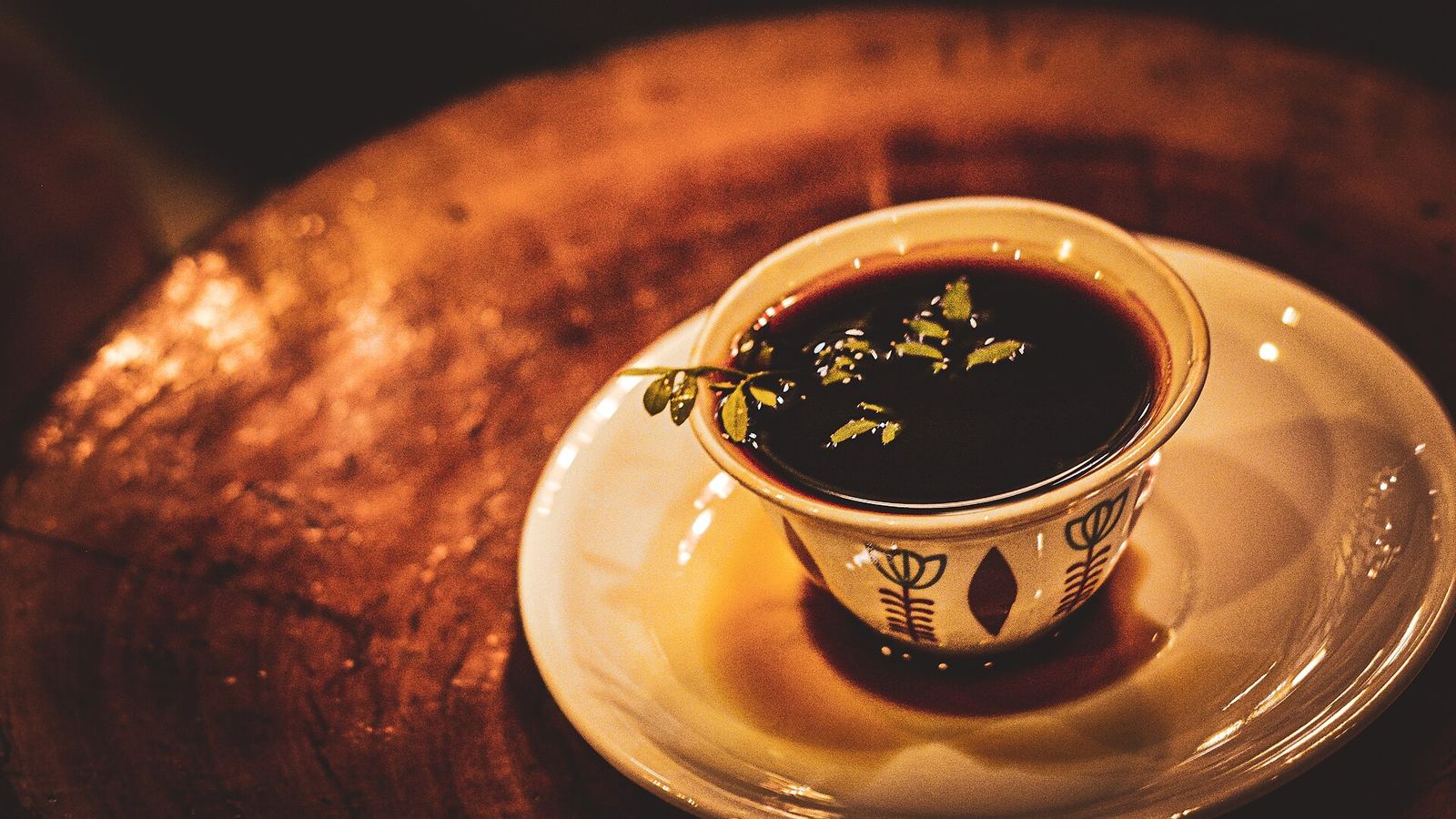
- Pouring. The coffee is poured from a height into small handleless cups (sini) in one continuous stream, without stopping, so the grounds stay in the pot. Sugar is usual; milk is not. In the countryside you may be offered salt or butter instead.
- Snacks. Popcorn, roasted barley (kolo) or bread (dabo) are passed round.
The three rounds
The same grounds are brewed three times, and each round has a name: abol, the first and strongest, tona, the second, and baraka, the third, which means "blessing". Leaving before the third cup is considered a little rude, which is why nobody in Ethiopia is ever in a hurry when coffee is served. Each round is weaker than the last, so a full ceremony is less caffeine than it sounds.
The coffee ceremony is not about the coffee. It is about the hour you spend together while it is being made.
A1 Car Rental team
Etiquette for guests
- Accept the first cup with both hands, or the right hand.
- Say "amesegenallo" (thank you) and compliment the coffee; it is the host's pride.
- Stay for all three rounds if you can. If you must leave, say so before the second.
- A small gift of sugar or coffee for the household is appreciated on a home visit.
- Children often help with the popcorn; let them.
Where to drink coffee in Addis Ababa
Our drivers spend a lot of time waiting outside cafés, so they have opinions. A short list, by neighbourhood:
- Tomoca, Piassa. Open since 1953, Italian machines, standing room only, the macchiato against which all others are measured. There are branches in Bole and elsewhere, but go to the original on Wavel Street.
- Piassa in general. The old Italian quarter still has the city's best espresso bars within a few minutes' walk of each other; a macchiato costs less than a dollar.
- Kazanchis and Bole. The newer cafés roast single-origin beans from Yirgacheffe, Sidama, Guji and Harar, and many sell bags to take home. Ask for a pour-over if you want to taste the difference between regions.
- Hotels. Most larger hotels run a coffee ceremony in the lobby or garden in the afternoon; it is a gentle introduction if you are not visiting a home.
- Anywhere with a jebena outside. In any neighbourhood, a stool, a charcoal brazier and a woman with a jebena means a ceremony is in progress and a cup costs a few birr. Sit down.
A coffee half-day with a car
Tomoca at 9:00, a walk through Piassa and the Adwa Memorial, a jebena coffee on a side street in Arat Kilo, then lunch and a roastery visit in Bole. With a driver you can do it in four hours without thinking about parking. Ask for the coffee route when you book, or combine it with the history drive.
Frequently asked questions
How long does an Ethiopian coffee ceremony take?
About an hour, from roasting the beans to the third cup. In a café or hotel, shorter versions take 20 to 30 minutes.
Where is the best coffee in Addis Ababa?
Tomoca in Piassa is the classic. For single-origin beans, the newer roasteries in Bole and Kazanchis.
What are the three rounds of Ethiopian coffee called?
Abol, tona and baraka. Baraka means blessing.
Sources and further reading
- International Coffee Organization, country profile: Ethiopia.
- Ethiopian Coffee and Tea Authority.
- A1 blog: New Flower: a short history of Addis Ababa.